Phoenix Space Program launches in Kilis, Turkey

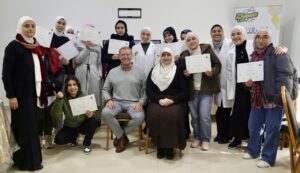
In mid-April, we began offering the Phoenix Space Program, our main STEM education offering, at the Nama’a Center in Kilis, Turkey. Approximately 25 students are participating. The program is a 32-week educational program consisting of weekly in-person and online classes combined with camps and workshops to teach 13-to 17-year-old students useful skills in mathematics, electronics, physics, coding, robotics, and project management. Lessons and assignments incorporate the inspirational theme of space science to increase student interest and engagement.

This is our fifth center in Turkey and our 8th cohort of the Phoenix Space Program.
SHARE THIS WITH YOUR FRIENDS:

READ MORE

Digital Heroes with PwC Middle East

In late 2021 we kicked off a conversation with a major consulting firm based in the Middle East. While we thought it would be a great collaboration, we never imagined it would result in a month-long digital learning programme concluding with over 1000 exams being completed and over 3200 lessons being shared. And yet here we are in Feb 2022,

READ MORE »

Kibera: Where Resilience Meets Possibility

Kibera began over a century ago as a temporary settlement for Sudanese soldiers. Today, it’s one of the world’s largest informal urban settlements, home to around 1.2 million people, shaped by decades of migration, conflict, and climate disruption.

Often reduced to statistics on poverty and overcrowding, Kibera is also a vibrant, tightly woven community filled with courage and ingenuity. It’s a place where grassroots movements are rewriting futures, especially for the next generation.

But the challenges are real, and urgent.

READ MORE »

How does Space Science teach STEM?

By Alexander Dutton, Head of Education of Phoenix Space When I tell people what we teach our refugee students here at Phoenix Space , the answer “Space science” usually elicits a surprised expression, quickly followed by a “Why?”. Understandably, I’ve become adept at explaining the importance and application of our studies, as well as the areas they teach and touch

READ MORE »