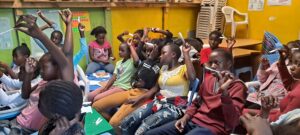
LaunchPad Challenge is open to 15 to 19-year-old students around the world.
The Phoenix Space LaunchPad Challenge lets students develop and present a creative, idea-based solution to a space science-themed problem. Students have the opportunity to apply their classroom learning and research to solving scientific challenges, leverage creativity, and develop presentation and teamwork skills while connecting to and competing against a global community of like-minded students who have an interest in space science.
The 2021 Challenge: How do we address a problem related to human habitation of Mars?
Working in teams of up to three, entrants will identify and define a problem statement from one of three topic areas related to human habitation of Mars and develop a logic-driven, researched solution to the chosen problem. The three topic areas are engineering, sustainability, and social organization.
The Basics
What is it?
The Phoenix Space LaunchPad Challenge is an academic competition in which learners develop creative solutions to a space-themed problem.
Who can enter?
Entry is available to learners around the world aged 15-19 anytime between April 30 and October 9, 2021. They will form teams of up to 3 to develop and present a solution. Each team may also have a mentor to guide their approach.
When is it?
The deadline to register is July 31, initial entries are due August 10th, and the competition concludes during World Space Week, in early October 2021.
What does the winner get?
The Grand Prize for the winning team is US$3,000. Each of the other 4 finalist teams receives US$1,000.
There are 3 rounds to the competition.
Round 1
Each team submits their initial written entry and a brief video for review.
Round 2
20 semi-finalists revise and create a more in-depth presentation.
Round 3
5 finalists present their solution live via webinar to the judging panel during World Space Week (October 4-5).
Full details of the LaunchPad Challenge are available on the Phoenix Space website at phoenixspace.org/academic-competition/.